
Thailand Travel Vaccines: What You Need Depends on Where You’re Going
April 16, 2026
6 minute read
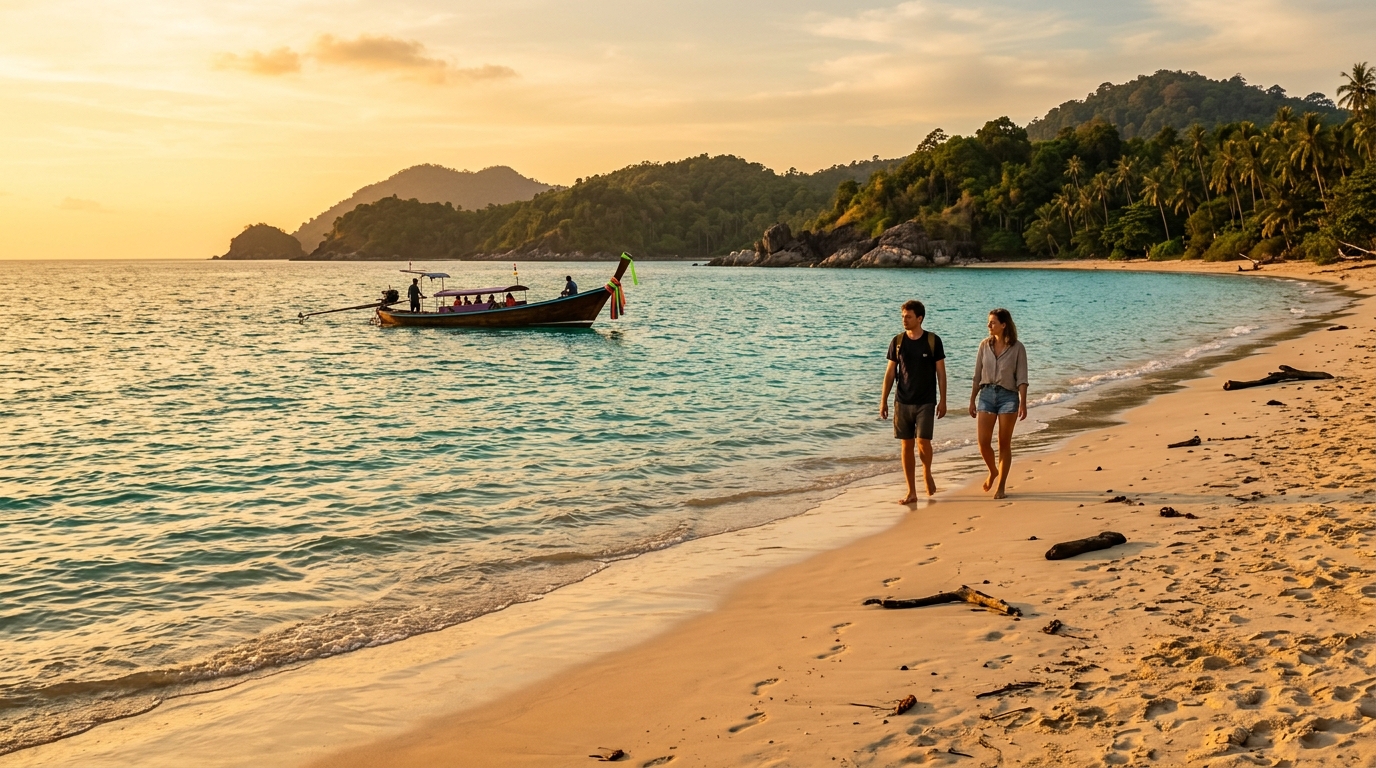
The flights are booked. The itinerary is taking shape. Now comes the part most people put off, working out which vaccines you actually need for Thailand and whether there’s still time to get them done.
At Ealing Travel Clinic on 30 Northfield Avenue, we help London travellers sort their Thailand travel vaccines every week. Some come in with six weeks to spare and leave with everything done in one appointment. Others call four days before departure wondering what’s still possible. Both situations are manageable. The earlier you come in, the more options are open to you.
Thailand is a destination where your itinerary matters more than almost anywhere else. A week at a Phuket resort is a very different health picture from two weeks trekking through the valleys north of Chiang Mai. We assess each trip individually — we won’t recommend vaccines that aren’t relevant to your specific route, and we won’t let you miss ones that matter.
Here’s the full picture, the vaccines every Thailand traveller needs, and the ones that depend on where you’re actually going.
What Most Travellers Need for Thailand — At a Glance
For every traveller, regardless of itinerary:
- Hepatitis A — £45 per dose
- Typhoid — £30
- Diphtheria / Tetanus / Polio booster — £30 (if overdue in the last 10 years)
Depending on where you're going and what you're doing:
- Japanese Encephalitis — £100 per dose / £200 full course (rural / north Thailand)
- Hepatitis B — £40 per dose / £120 full course (longer stays, medical risk)
- Rabies — £90 per dose / £180 full course (outdoor activities, children)
- Chikungunya (Vimkunya®) — £175 single dose (especially northern Thailand)
Malaria tablets: Border areas only — from £0.45 per capsule (doxycycline).
Most popular destinations including Bangkok, Phuket, Koh Samui, and Chiang Mai city require no antimalarial medication.
Consultation is included in the price of every vaccine at our clinic.
The Vaccines Every Thailand Traveller Should Have

Whatever your itinerary — Bangkok city break, island holiday, VFR trip, or business travel — three vaccines form the recommended foundation for any journey to Thailand.
Hepatitis A — £45 per dose
Transmitted through contaminated food and water, and present across Thailand regardless of your accommodation standard. The virus can reach kitchen staff at five-star hotels just as readily as it travels through street food.
- Single dose before travel: around 95% protection within two weeks
- Second dose at 6–12 months after your return: covers you for 20+ years
- One dose before travel is sufficient protection for the trip
Typhoid — £30
Food and water-borne, and the risk exists across Thailand including at higher-end restaurants. The risk comes from the food supply chain as a whole, not just the places that look less clean.
- Single injectable dose
- Protection develops within one to two weeks
- Lasts three years
Diphtheria, Tetanus and Polio (DTP) booster — £30
Worth reviewing before any international travel. Tetanus risk is real anywhere cuts or wounds are possible, and most UK adults are due a booster every ten years.
- One dose if you haven’t had it in the last decade
- If you’ve had it within ten years, you’re already covered
- One of the most overlooked vaccines we see across all destinations
How Quickly These Vaccines Work
Hepatitis A: protection reaches 95% within two weeks of the first dose.
Typhoid: single injection, one to two weeks for full protection.
DTP booster: if you've been vaccinated before, the booster reinforces existing immunity quickly — no need to wait.
All three can usually be given in a single appointment.
If you're travelling in the next two to three weeks, it's worth coming in now rather than leaving it any later.
Do You Need Malaria Tablets for Thailand?
The majority of travellers to Thailand do not need malaria tablets. This surprises a lot of people, partly because Thailand is in Southeast Asia and partly because travel health advice can sometimes present the region as uniformly high-risk.
The reality is more precise: malaria risk in Thailand is highly area-specific, and for the most popular tourist destinations, the risk is either very low or absent altogether.
Bangkok carries no malaria risk. Neither does Phuket, Koh Samui, Koh Phangan, Koh Tao, Koh Lanta, Koh Phi Phi, Pattaya, Hua Hin, or Chiang Mai city centre.
If your trip is based around these places which covers the vast majority of package holidays, beach breaks, and independent travel, you don’t need antimalarial medication. We won’t prescribe tablets you don’t need.
| Area | Malaria Risk | Recommendation |
| Bangkok (all districts) | None | No tablets needed |
| Phuket Island (main tourist areas) | None | No tablets needed |
| Koh Samui, Koh Phangan, Koh Tao | None | No tablets needed |
| Koh Lanta, Koh Phi Phi (Krabi islands) | None | No tablets needed |
| Chiang Mai city centre | None | No tablets needed |
| Pattaya, Hua Hin | None | No tablets needed |
| Kanchanaburi Province (main tourist areas) | Very low | Bite avoidance |
| Rural areas near Myanmar border | Moderate–high | Antimalarials recommended |
| Rural areas near Cambodia border | Moderate–high | Antimalarials recommended |
| Rural forested areas near Laos border | Moderate | Antimalarials recommended |
| Far southern provinces (Malaysia border) | Low–moderate | Discuss at consultation |
Sources: NaTHNaC TravelHealthPro (December 2025), CDC Yellow Book 2026. Travellers with significantly reduced immunity, pregnant women, infants, or those over 70 should discuss their individual risk with Sachin at consultation even for the lower-risk areas above.
If you’re travelling near Thailand’s borders, you may need antimalarials.

The higher-risk areas are the forested, rural zones bordering Myanmar, Cambodia, and Laos — specifically the provinces of Tak, Mae Hong Son, Chiang Rai (border zones), Kanchanaburi, and Ranong. If your itinerary includes any of these areas, bring it to your consultation.
One important restriction applies here: mefloquine (Lariam) is not suitable for the Myanmar or Cambodia border regions due to documented drug resistance. The recommended options are:
- Atovaquone/proguanil (Malarone) — £2.50 per tablet
- Doxycycline — £0.45 per capsule
Note that mefloquine was in short supply in the UK until the end of March 2026 (NaTHNaC 2026), which is an additional reason to discuss alternatives at your appointment.
Dengue is a different conversation entirely.
It’s present throughout Thailand — not just border areas — and 51,795 cases were recorded across the country in 2025, with 46 deaths (NaTHNaC, October 2025). There is no universally appropriate vaccine for most travellers. Protection comes down to behaviour:
- DEET-based repellent, applied during daylight hours as well as at dusk
- Long sleeves and trousers at dawn and dusk
- Air-conditioned or well-screened accommodation where possible
Vaccines That Depend on Your Itinerary
Three further vaccines are worth discussing, but whether you need them depends on your specific route and activities.
Japanese Encephalitis (JE)
Rural northern Thailand · Chiang Mai valley · Chiang Rai border regions
Transmitted by Culex mosquitoes in rural agricultural areas. The distinction matters: Chiang Mai city centre carries low risk. The river valleys and farmland outside the city carry higher risk, particularly during the rainy season from May to October.
Consider if your trip includes
Doses required
2 doses
Schedule
28 days apart | 7 days accelerated
Protection begins
7 days after 2nd dose
Cost
£100 per dose / £200 full course
Hepatitis B
Longer stays · Medical or dental exposure · Activities involving skin-breaking
Thailand's private hospitals in Bangkok are excellent, but medical care in rural and island areas is variable. The Hepatitis B risk from blood-borne exposure is worth guarding against for longer trips or those involving certain activities.
Recommended if you are
Doses required
3-dose course
Schedule
Standard 6 months | Rapid 0/7/21 days
Rapid course booster
Required at 12 months
Cost
£40 per dose / £120 full course
Rabies
Present throughout Thailand · Risk higher than most travellers assume
Stray dogs are common across the country, and temple monkeys account for a proportion of bite and scratch incidents each year. Pre-exposure vaccination significantly extends the window for post-bite treatment and removes the need for rabies immunoglobulin, which is frequently unavailable at the hospitals where it is most needed.
Doses required
2-dose course
Schedule
Days 0 and 7
Key benefit
Removes need for immunoglobulin post-bite
Cost
£90 per dose / £180 full course
Chikungunya — The Fastest-Growing Risk in 2025
Thailand recorded 1,379 chikungunya cases in 2025, approximately double the number reported in 2024 (NaTHNaC, December 2025). The northern region, particularly around Chiang Mai, reported the highest numbers.
The chikungunya vaccine Vimkunya® is now available at our clinic. It is a single dose, costs £175, and provides 98% protection within three weeks for travellers aged 12 and over. It is particularly relevant for anyone spending time in northern Thailand, travelling during the May–October rainy season, or spending time outdoors in areas with daytime mosquito activity.
Ealing Travel Clinic uses Vimkunya®. The earlier IXCHIQ formulation was suspended following serious safety concerns in 2025 — Vimkunya® uses a different virus-like particle technology and has no comparable safety signals.
What Your Trip Type Means for Your Vaccines
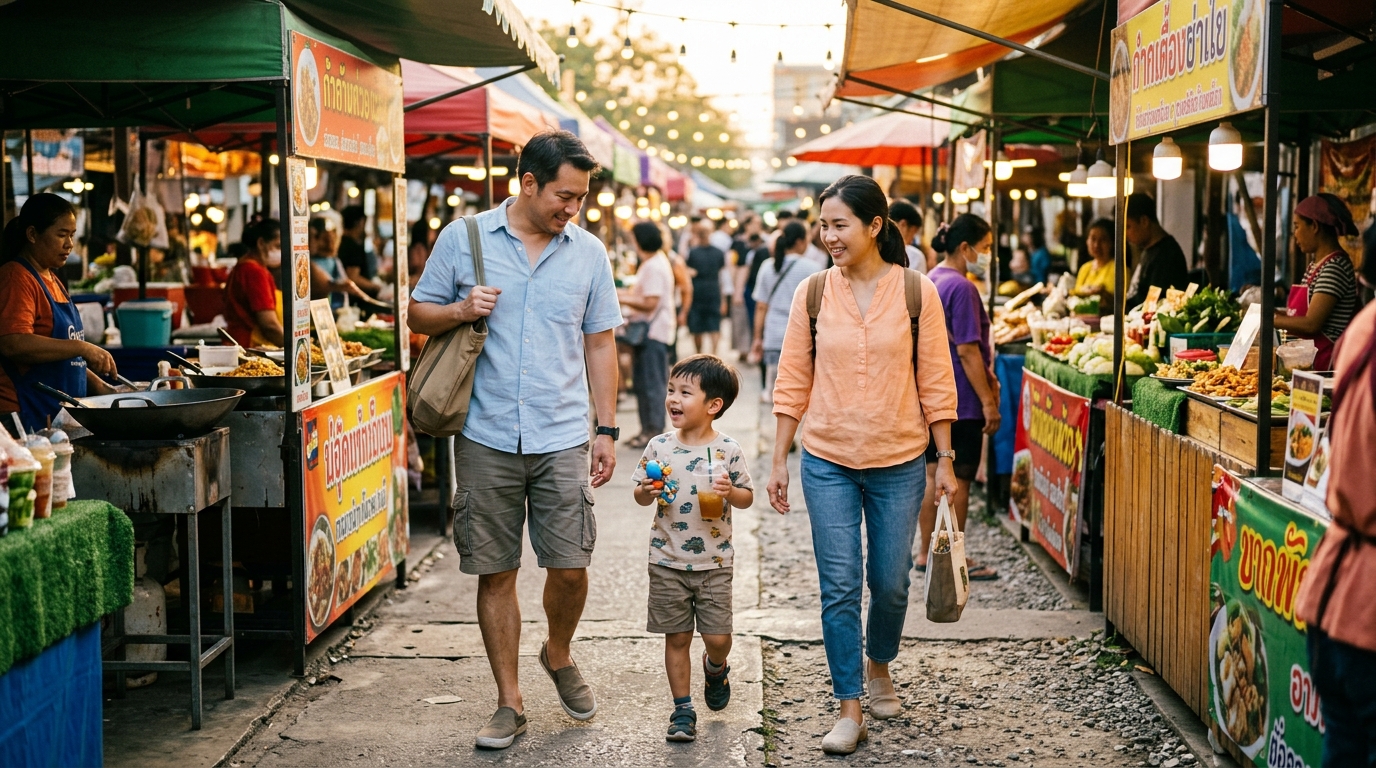
Thailand is not one destination — it’s several, with very different health profiles. Rather than a generic list, here’s how vaccine recommendations typically break down by trip type. These are starting points; your consultation with Sachin will refine the list based on your actual itinerary.
| Trip Type | Core Vaccines | Also Consider | Approx. Cost |
| Beach holiday (Bangkok + islands) | Hepatitis A, Typhoid, DTP | Hepatitis B (stays over 4 weeks) | From £105 |
| Chiang Mai / northern Thailand | Hepatitis A, Typhoid, DTP, JE | Rabies, Chikungunya | From £305 |
| Adventure / backpacker | Hepatitis A, Typhoid, DTP, JE, Rabies | Hepatitis B, Chikungunya, malaria advice | From £485 |
| Visiting friends and relatives | Hepatitis A, Typhoid, DTP | Hepatitis B, Rabies, JE (if rural) | From £105 |
| Business travel (Bangkok only) | Hepatitis A, Typhoid, DTP | Hepatitis B (repeat travel) | £105 |
| Long stay / expat (1 month+) | All of the above | Malaria advice, full hepatitis cover | £485+ |
Families visiting relatives in Thailand often underestimate their own risk profile. VFR travellers — visiting friends and relatives — tend to stay longer, eat more local food, spend more time in rural areas, and feel less urgency around pre-travel health because Thailand feels familiar. In practice, the exposure risk is frequently higher for this group, not lower.
Children should be assessed for rabies vaccination regardless of the overall itinerary. They are the age group most likely to approach animals and least likely to report a minor scratch that didn’t seem significant.
One group that frequently travels through our clinic is longer-stay travellers — retirees, people on sabbatical, or those with family roots in Southeast Asia. For anyone spending more than a month in Thailand, we recommend reviewing the full vaccine list including Hepatitis B, Rabies, and JE rather than defaulting to the beach-holiday minimum.
Current Health Alerts for Thailand — As of March 2026
Thailand Health Alerts — March 2026
DENGUE — HIGH AND ONGOING
51,795 cases and 46 deaths recorded in Thailand in 2025 (NaTHNaC, October 2025).
Qdenga (the dengue vaccine) is available at our clinic — for those with prior dengue exposure.
CHIKUNGUNYA — RISING SIGNIFICANTLY
1,379 cases in 2025, approximately double 2024 numbers. Chiang Mai highest.
The Vimkunya® vaccine is available at our clinic.
RABIES — BANGKOK AREA ALERT ACTIVE
NaTHNaC issued a rabies alert for several Bangkok districts in September 2025.
Avoid all contact with stray dogs, cats, and monkeys.
MEASLES — GLOBAL OUTBREAK ONGOING
WHO and CDC issued a global measles outbreak alert in May 2025.
Ensure all travellers, particularly those under 30, are up to date with MMR.
MPOX — MONITOR
Five confirmed clade Ib mpox cases in Thailand as of April 2025.
Monitor NaTHNaC for updates.
None of these alerts should put you off travelling to Thailand, but they do reinforce the value of a proper pre-travel consultation before you go.
When to Book Your Thailand Vaccines
The timing question is one we’re asked constantly. The honest answer is that six to eight weeks before travel is the ideal window, and three weeks before is the practical minimum for most vaccines.
- Book your consultation as soon as your trip is confirmed. Six to eight weeks before departure gives you the most flexibility, particularly if Japanese Encephalitis is likely on your list. Book online or call 0208 567 0982.
- Bring your full itinerary and any vaccination records you have. The more specific you can be about where you’re going, the more precise our recommendations will be.
- At the consultation, we review your trip in detail. Destinations, activities, accommodation type, trip duration, any relevant health history, and any vaccines you’ve had before.
- Most vaccines are given the same day as the consultation. If Japanese Encephalitis is recommended, we plan a dose schedule to fit your travel date.
We give you a full record of vaccines given and any follow-up doses. Keep this with your travel documents.
Air Quality Note for Northern Thailand Travellers
Chiang Mai and Chiang Rai provinces experience significant agricultural burning between February and April each year, producing heavy smog that can exceed Thai and US government daily air quality standards. If you're travelling to the north during this period and have any respiratory condition, it's worth discussing this at your consultation.
| Vaccine | Doses Required | Per Dose | Full Course | Notes |
| Hepatitis A | 1 before travel | £45 | £45 | 2nd dose at 6–12 months for 20+ yr cover |
| Typhoid (injectable) | 1 | £30 | £30 | 3 years' protection |
| DTP (Diphtheria/Tetanus/Polio) | 1 (booster) | £30 | £30 | Needed if overdue (10-year interval) |
| Japanese Encephalitis | 2 (7 or 28 days apart) | £100 | £200 | Accelerated schedule available |
| Hepatitis B | 3 (0, 7, 21 days rapid) | £40 | £120 | Rapid course requires 12-month booster for long-term immunity |
| Rabies (pre-exposure) | 2 doses: days 0, 7 | £90 | £180 | 2 Dose course |
| Chikungunya (Vimkunya®) | 1 | £175 | £175 | Single dose, 98% protection in 3 weeks |
| Malaria — Atovaquone/Proguanil | Daily tablet | £2.50 | By duration | Border areas only |
| Malaria — Doxycycline | Daily capsule | £0.45 | By duration | Border areas only |
For a typical beach holiday — Hepatitis A, Typhoid, and DTP booster — the total is £105. Adding Japanese Encephalitis for a Chiang Mai trip brings it to £305. A full adventure package including Rabies is £485. Chikungunya at £175 can be added to any package where northern Thailand or outdoor rural activity is involved.

